
Why Apex SIPs?
-
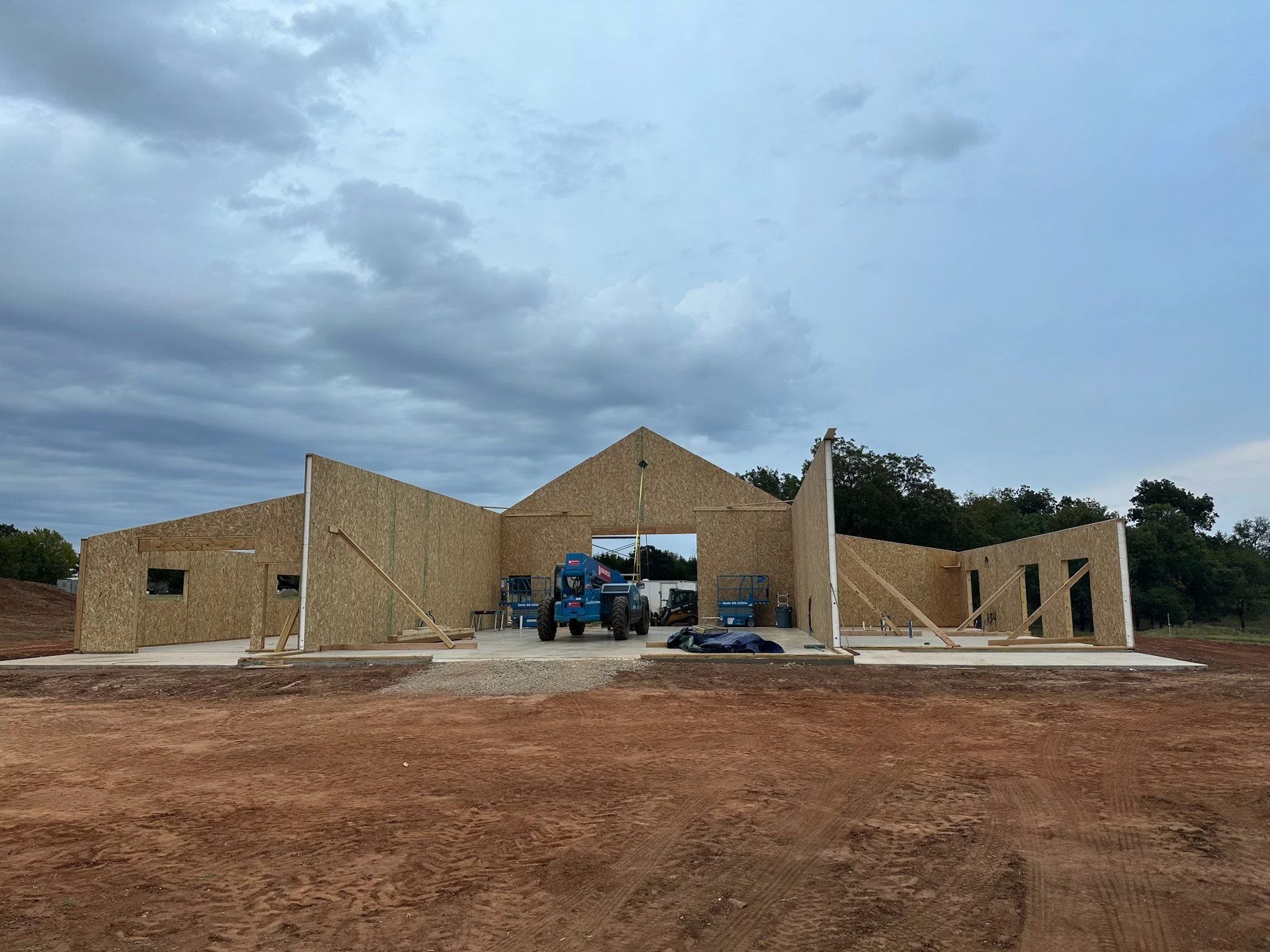
90 Years of Proven Building Science
The concept goes back to 1935 at the Forest Products Laboratory in Madison, Wisconsin. Frank Lloyd Wright used a version of SIPs in his Usonian homes. The first foam-core panel was built in 1952, and panels have been in mass production since the 1960s. This isn't a trend — it's nine decades of tested, proven building science used all over the world.
What's new is that the rest of the industry is finally catching up. Energy codes are tightening, continuous insulation requirements are spreading, and the 2021 and 2024 IECC are pushing the building envelope harder than ever. SIPs meet those requirements by default.
For the image, swap in a panel cross-section photo or an assembly shot if you have one. If not, keep whatever image looks most like "building science" until you get a better one.
-
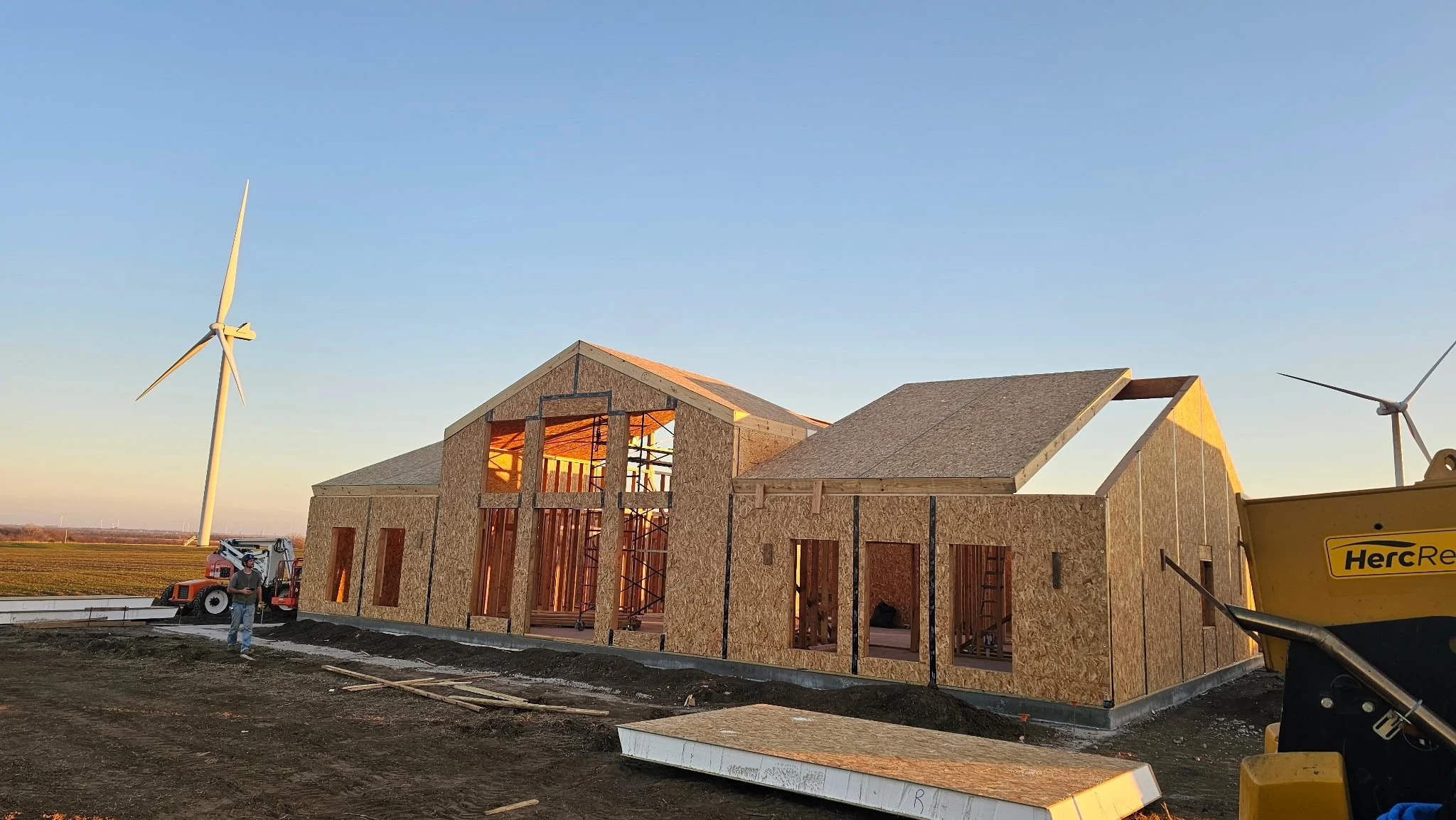
The Numbers Dont Lie
50% more energy efficient than conventional stick framing — Structural Insulated Panel Association.
15 times more airtight than comparable stick-framed walls — Oak Ridge National Laboratory.
55% reduction in on-site framing labor — BASF time-motion study.
These aren't marketing claims. This is peer-reviewed, lab-tested building science backed by SIPA, the US Department of Energy, and independent research institutions.
When someone tells you SIPs are "too expensive," they're comparing a building system to a pile of lumber.
Compare the total installed cost — including labor, time, HVAC sizing, and waste — and the math changes fast.
-
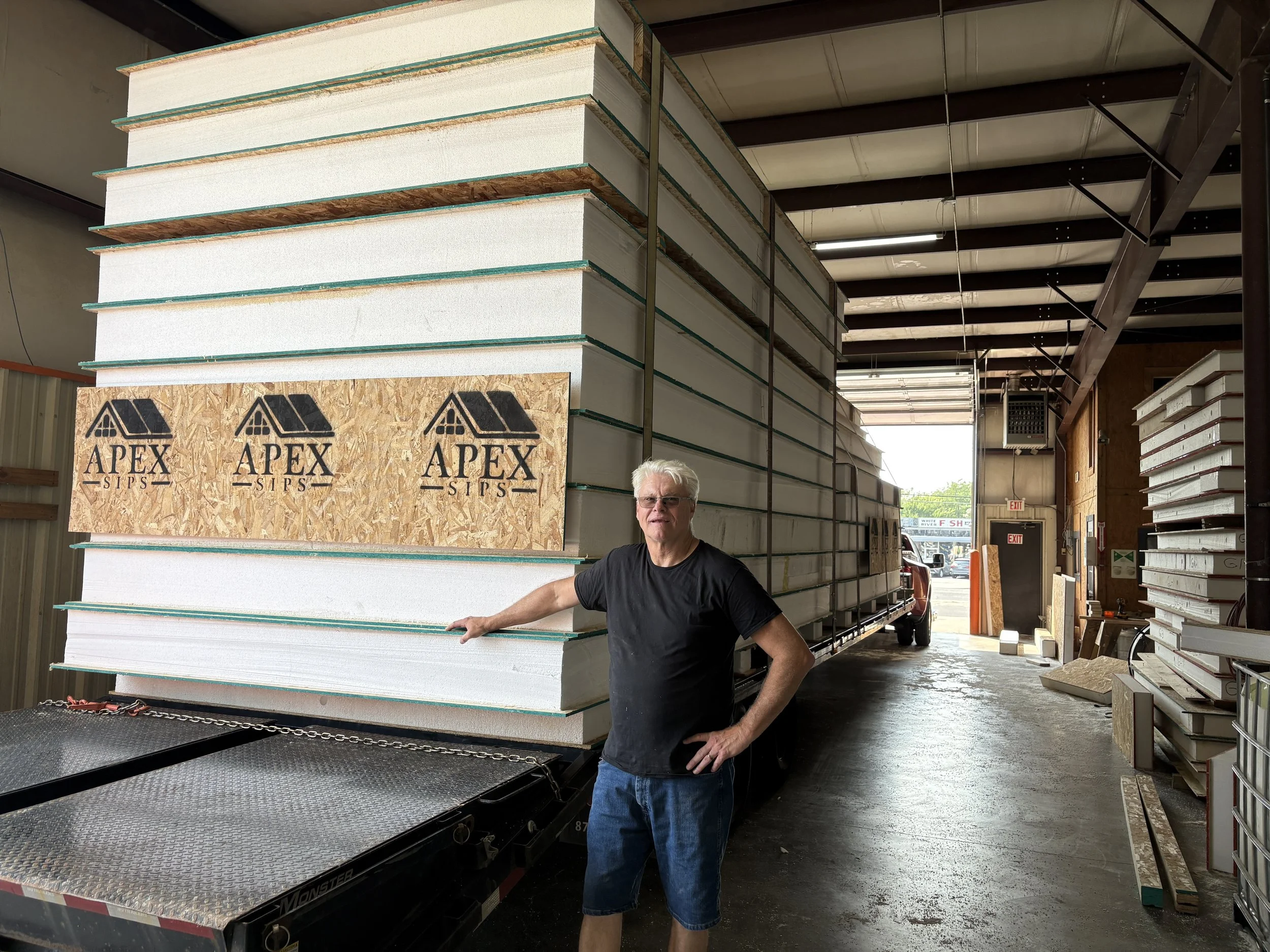
Engineered. Stamped. Accountable
Every Apex SIP project is engineered and sealed by a licensed Professional Engineer. That's not optional — it's how we build. In much of rural Oklahoma and Texas, there are no required building inspections. The only accountability in a stick-built house is whoever framed it and whether the inspector showed up that day.
Our engineering doesn't depend on an inspector showing up. And with where energy codes are headed — Kansas City, Colorado, Washington, California all moving toward continuous insulation requirements — building to today's minimum code means building a house that may not meet code in two to five years. SIPs put you ahead of that curve.